Let’s Put Down the Match (the AI Revolution)
I’m somewhat new to the writing and publishing industry. And while I’ve orbited the earth a solid fifty years, it’s only been within the last few that I’ve delved deeply into what it takes to write and finish a book…what it takes to be traditionally published. Frankly, it’s terrifying. The competition is fierce, and the payouts are small (at least to start—we can’t all be Nora Roberts). And now we’ve added AI to the mix. I’m not afraid.
I’ve seen so many people truly panicked by AI. Let me be clear as I write this: I’m no expert. ChatGPT has made me some fantastic menus that helped me lose 25 lbs., helped me count macros, suggested workout programs, and refreshed lesson plans and rubrics that were dusty with age. Honestly, it’s made my life easier in many ways, but I’m not sure it’s doing anything I couldn’t do before it existed, only more efficiently. It’s given me back time I can now devote to the craft of writing. It seems to me, in my small and humble opinion, that the fearmongering surrounding this technology far outweighs the actual threat. It’s become the next political platform and catchphrase for all that is wrong in our world. The next big thing we can blame, lest we ever look at ourselves (mirror, anyone?).
AI will not replace authors or editors or artists or musicians. Robots can’t perform at a concert in the same way Shinedown brings a venue to life. They can’t curate a gallery that melts your soul onto the canvas or enthrall audiences at a book signing in a way that makes you want to stand in line for that signature on the first page. Yes—there are full novels out there being generated by AI (from the rumors I hear, and you’ll snatch the em dash and the Oxford comma from my cold, dead, bare hands, so there!), but I can spot generative writing pretty immediately, and I’m pretty sure you can, too.
Data centers existed long before generative AI became popular. They've been powering the internet for decades. You are not destroying the planet when you ask AI to make you a low-calorie Christmas cocktail recipe, and I find it a bit funny how AI data centers are suddenly an environmental crisis, but the fossil fuels powering electric vehicle charging stations get a pass. Let’s pick a struggle.
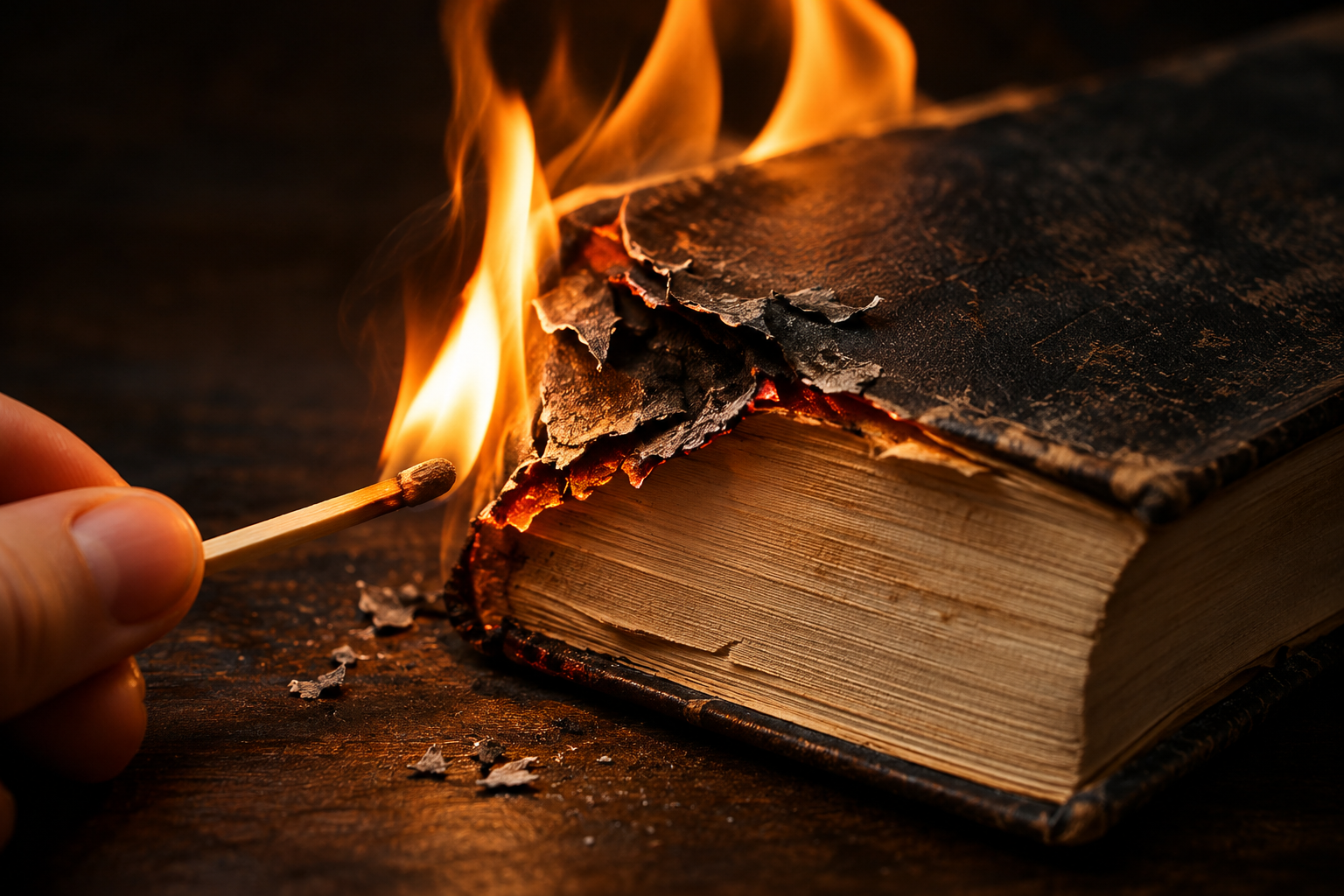
But this witch hunt targeting authors is getting out of hand. Arthur Miller (remember him from high school English?) explored this very danger in The Crucible. When we’re caught up in the frenzy, we rarely recognize the damage we’re doing. It’s only after the smoke clears that we begin to understand what we’ve burned down. I’m watching in real time as authors’ lives are being destroyed through accusations without proof, and many of these folks are just starting out, dipping their toes into a social media presence, and being lit on fire. Let’s put down the match.
We can’t deny the reality of AI. I recently watched a TikTok from indie author Steven Aitchison (@steven_p_aitchison) about this phenomenon. If you don’t have time to watch, in essence, he says authors have always relied on editors, proofreaders, and other professionals to improve their books, yet nobody questions their authorship. Introduce AI, and suddenly getting help becomes controversial. He argues that the real question isn't whether AI was used, but how it was used and who ultimately made the creative decisions. There's a big difference between asking AI to identify a plot hole and asking it to write your entire novel.
THIS! THIS! THIS! It all comes back to human choices. Almost every argument I hear about AI has nothing to do with the actual technology and everything to do with how humans are using it. We are the problem. We didn't blame Photoshop for digitally altered beauty standards. We didn't blame the printing press for propaganda. We didn't declare calculators the death of mathematics or spellcheck the end of literacy (although literacy is an entirely different situation right now and has nothing to do with spellcheck). We recognized that tools can be used responsibly or irresponsibly. Yet somehow, when it comes to AI, we've decided the mere act of using the technology is evidence of wrongdoing. Perhaps we should spend a little less time condemning the tool and a little more time examining the choices of the people using it.
This is my first blog on my website—go big, right? (Don’t throw in “go home” because I’ll always go home. I like it there.) But I think it’s a conversation worth having, or maybe a conversation not worth having anymore. I’ve been writing the same sweet romance novel for fifteen years. Not a drop of it has been written by AI. My cozy mystery has been collecting dust for a while now, too. I’ve published short stories and essays, all written by me. It would be crushing to have someone come along and declare me a fraud when I know I’m not. AI isn’t destroying us; false accusations are destroying us. I think I’ve seen this play before, and I didn’t like the ending.
P.S. And if you want to come for me and accuse me of using AI to write this, go right ahead. I know where my integrity stands, and I don’t need your approval to validate it.